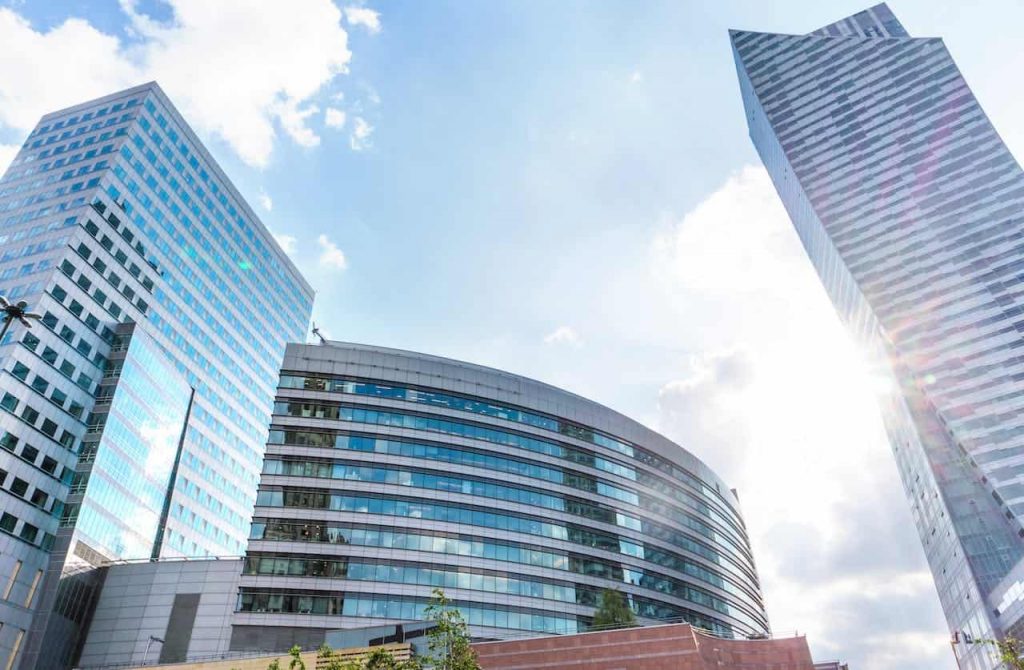
We have a historically low rate of just 3% of vacant first-class office space in the Zagreb market, and there is practically no vacant space in first-class logistics facilities.
With Predrag Tutić from the company CBS International d.o.o., Cushman & Wakefield Group, we talked about the behaviour of individual segments of the real estate market during the coronavirus crisis, the trend of working from home, the impact of online sales, the challenges of the tourism sector, and the recovery and future investments in the real estate market. Below we present an interview of Predrag Tutić with the portalPoslovni.hr.

How has the crisis caused by the coronavirus pandemic affected the trading of commercial real estate in Croatia and the region?
When it comes to the Croatian commercial real estate market, it began 2020 on solid indicators, such as a continued growth in the number of transactions in the leasing and sale of commercial space and client activity in all market segments.
However, from the end of March, when the coronavirus-induced lockdown began in Croatia too, the trading of commercial real estate practically froze, both in terms of leasing and sales.
When we look at the markets in the region closest to Croatia, in countries such as the Czech Republic, Hungary and Serbia, the impact of the crisis is generally similar, but it is important to emphasise that certain transactions of commercial projects were nonetheless completed there during the lockdown and the markets reacted more resiliently than Croatia.
This situation affected all market segments, but certain segments were more exposed to risks and consequences than others. Those segments that directly depend on social contact or interaction with people, such as the hotel industry or the retail space market, are the most affected due to the ban on travel and work, while other segments such as office space, warehouse and logistics facilities, as well as the residential real estate segment, are more resilient in the current situation, but not immune.

Owners of shopping centres throughout Croatia had to revise relations with their tenants regarding leasing during the lockdown, and unfortunately their situation was further complicated by the measures they had to meet when reopening the centres and shops.
The office space market, which is currently stable, reacted much better and met the whole situation well, so we still have a historically low rate of just 3% of vacant first-class office space in the Zagreb market and very stable rents.
Also, the logistics market was stable; we practically still have no vacant space in first-class logistics facilities, rental prices are stable and among the highest in the region, and with the increase in online shopping we see that demand for new warehouse capacity is additionally increasing.
Can we, given the reduced economic activity and the trend of working from home, expect a decrease in demand for and investment in office space?
I am sure that this part of the market will remain not only stable, but that with the development of various branches of business, a need will also be created for new office space projects that will offer companies additional amenities for their employees so that they feel more comfortable and safer, raise their productivity and retain young talent in their companies.

At the beginning of April, our office conducted the survey “Traditional office vs. working from home in changed business circumstances”, in which companies from various industries operating in Croatia took part.
The survey showed that 94% of employees successfully adapted to working from home, while only 6% of employees continued to work in the office.
Additionally, the data show that 64% of employees see the greatest advantages of working from home in a flexible work schedule and a sense of security during the pandemic, which enables employees to organise their daily routine according to their needs.
On the other hand, although the time spent with family is considered an advantage, employees confirmed that it also presented a major challenge for them, because various activities and obligations with children affect reduced efficiency at work.
As the biggest obstacle in such a way of working, a third of respondents highlighted the lack of social contact and interaction with colleagues, slower exchange of information and ideas, as well as the absence of “face-to-face” meetings.
A certain number of companies will nonetheless go through certain changes in work, and some of them would include better organisation of time and space, flexible workplaces, the possibility of working from home a few days a month, which is in line with the change in the perception of the classic 9-to-5 working hours.
Still, working from the office certainly provides an additional sense of security and belonging to the company. Finally, we come to a very important item, and that is the conditions in which we all worked from home, which certainly, from the aspect of occupational safety and the equipment we use, cannot in any way be compared to working in office spaces, and I believe we all felt this.
What do you expect in the future in the market of industrial and logistics real estate?
Logistics is developing more than ever, it is changing and does not operate only locally; instead, logistics processes are connected at the global level, which makes it a very important factor in every economy, and that is why it is important that Croatia plays a better role here than before and takes advantage of the opportunity of its geographical location.
In this market segment, trends are also changing very quickly, so you have the example of the transition of one part of the business of distribution companies, which are increasingly investing in producing their own products, or how online sales have affected the logistics sector and in a very short time created strong demand for new spaces and opened the door to new investments.
When we compare Croatia with the countries in the region, unfortunately we do not have a strong industry, but we expect that demand for logistics space will continue to be strong in the short and medium term. If Croatia invests in railway and seaport infrastructure, we can position ourselves better in the industrial and logistics market in the region and attract part of the planned investments in this part of Europe.
This year a decline in the number of tourists in Croatia is to be expected. What impact will that have on the hotel industry?
The impact will certainly be strong and a very challenging period lies ahead for hoteliers, because most countries still have restrictions on the mobility of their citizens and are trying, through various incentives, to encourage their fellow citizens to stay in their own countries and help the tourism sector.

This year will be difficult and demanding for our hoteliers, who have already launched a series of benefits for guests and are preparing for the main part of the season, which normally generates more than 70% of the total annual revenue of that sector, and we will only see in June how much we will manage to salvage the season.
But let us bear in mind that in these uncertain times, for a good part of European countries, and given the favourable epidemiological situation in the country, Croatia is a safe destination that, with its proximity and good transport connections, certainly competes with some distant and exotic countries. For this reason, we hope that we can also count on a portion of tourists who will certainly not risk long journeys.
Are new trends coming in individual market segments?
Certainly, trends are constantly shaping individual parts of the real estate market, so we have the example in the retail segment, where over the past ten years or so we have gone through a transition from classic shopping in stores in the city centre, after which modern shopping centres appeared, to the surge in online sales, which has started to change our shopping habits and will only strengthen in the coming period, and it will be interesting to watch how retail transforms.
When it comes to office space, the situation caused by the COVID-19 virus has already brought about some changes. For example, Cushman & Wakefield has implemented a new office space arrangement concept called ‘Six Feet Office’ in dozens of offices around the world, which enables a safe return to workplaces. The guide includes six elements that need to be incorporated into the office space so that employees are sufficiently distanced from one another and so that they adequately protect their own health and that of their colleagues. Likewise, the modern era and new technologies have refreshed approaches to work.
It used to be considered sufficient to provide employees with a desk and a computer, while today office space is increasingly put in the service of the people who use it every day, in order to evoke a feeling of optimism, well-being and belonging, stimulate greater engagement and improve results. New trends in the organisation of office space are most present in IT companies, but around the world even formal structures such as banks are increasingly turning to them. Instead of classic offices, employees are offered a system of interconnected zones that support different ways of working and give employees the possibility of choice and control over deciding whether group or independent work suits them better at a given moment. Nowadays, a type of business is increasingly common that implies employees are out in the field for most of the day, so it is neither necessary nor cost-effective to provide a desk for each employee. In that case, plug & play informal work zones are applied, which reduces the square footage needed for leasing, but also increases employee productivity through the aforementioned diversity of space.

When we look at the tourism sector, trends have also changed the way and perception of tourism, which does not consist only of swimming at the beach; instead, we are developing content such as Advent in Zagreb or congress tourism in Dubrovnik.
We still have a lot of room in developing tourism offerings such as eco-tourism, which is increasingly popular in Europe, then so-called Bleisure travel, i.e. combining a business trip with rest and entertainment, organising various team buildings, additional content at conferences and the like.
A trend common to all market segments is the application and development of new technologies that will change real estate products and improve the way they are used.
Although it is still difficult to predict how the situation with the coronavirus will develop, can you give some projection of the market by the end of the year, which segment will recover first and where the most lucrative investment opportunities for investors will be?
It is difficult to predict how everything may develop, but we all hope that the situation will stabilise by the end of the year, because until we have indications of what health risks await us, investors will hold off on decisions.
Housing construction will certainly depend on two most important elements, namely the economic situation in the country, which affects purchasing power and the sense of security, and the lending conditions, which have started to slowly tighten.
Investments in the commercial real estate market will certainly continue, given that we have very attractive returns on investment compared to, for example, the current instabilities in the stock markets.
In the coming period, I first expect a recovery of investments in the office space market, which is very stable and we do not expect major disruptions, then finally the launch of investments in logistics projects, which are very much needed, and a continuation of investment in the tourism sector, which will certainly recover strongly as soon as the potential health threat passes.