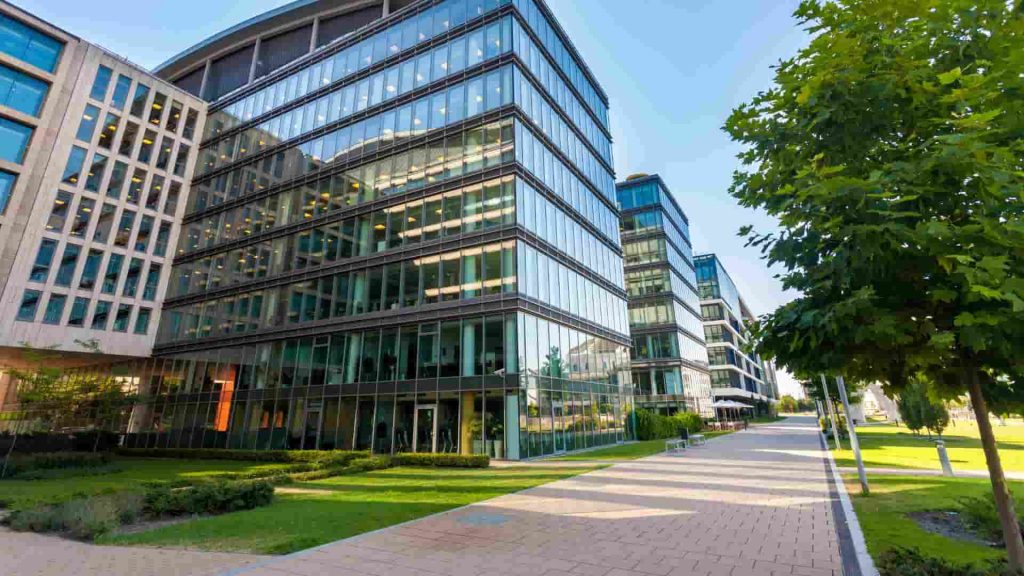
Although demand for office space continues to grow, supply unfortunately does not follow this trend.
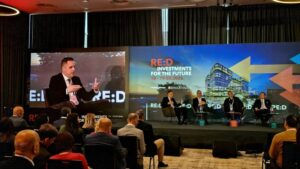
Office space in Zagreb is a particular problem –the office vacancy rate is below 3%and is the lowest compared to all major cities in the region. The most sought-after wereoffice spaces of 300 square metres– last year more than 60,000 square metres of offices were leased in Zagreb. However, there are still too few offices. This trend will continue over the coming years, given the lack of announcements of major projects. It was precisely because of this issue that a round table was held atJutarnji listas part of the D&D Grand Prix project, in whichPredrag Tutić, Director of CBS International Croatia, part of the Cushman & Wakefield Group, also took part. Below we present all the most important facts about the state of the office space market and how, in a supply that does not keep pace with the needs of the market, to find exactly what your business needs. 
Urban planning
– Zagreb actually has a problem with office space; last year a total of more than 60,000 square metres were leased and the vacancy rate in Zagreb fell to 3 percent, which is the lowest in the region, said Tutić. So why are few office buildings being built in Zagreb, we asked those gathered. The main reason would be in urban planning, they believe, i.e. there are few quality plots for this kind of construction on the market, although they can be found with considerable effort. The overall situation with construction prices and material availability is also additionally demanding. – The return on invested money is motivating, it is still attractive at around 7.5–8 percent, while in Prague it is 4–5 percent and in Vienna 2–3 percent, added Tutić. They also commented on the recent statement by Elon Musk, who reportedly told employees to return to the offices or he would consider that they no longer work for them. He is not the only one, it could be heard – the company Goldman Sachs sent the same message at the first signs of the pandemic easing, only they did it with kid gloves. Work efficiency is higher in offices in some industries, although not in all, and it also depends on the offices themselves. Most companies arrange their own offices, i.e. they assign someone to do it. Andrej Vučković from the agency Eurovilla said that almost all office spaces are leased empty. That agency specialises in supply in the centre of Zagreb, of which there is not much, but quality offices are occasionally found, as well as office spaces within class A office buildings.
Office space in the centre most sought-after
They notice a return to the centre, and offices are mostly sought for law firms and travel agencies. Street-level premises, after the earthquake and the return of tourists to the city centre, are again almost fully occupied because the centre is once more the hub of all events. – According to statistics, the most sought-after offices in Zagreb are around 300 square metres in size. Although the productivity of working from home was surprisingly high at the beginning of the pandemic, in the long run it was to be expected that it would not be sustainable, adds A. Vučković. The greater demand in Zagreb for offices, our interlocutors agreed, is not the result of a large number of new companies, but of the expansion of existing ones. Some have given up leasing offices in apartments because they want to be in modern buildings that, in addition to their excellent infrastructure, also have additional amenities to offer employees. Zvjezdana Novak, a manager at the Danish company JYSK, says, however, that when furnishing offices, functional furniture with simpler lines and tones is mostly sought, costs are watched, with an emphasis on ergonomics. – As a Scandinavian brand, we have such lines that are acceptable to many, timeless, and we offer multipurpose and more sustainable solutions. During the pandemic and working from home, many installed home offices in the dining room or bedroom, sales of office furniture increased significantly, and I would particularly single out adjustable desks and gaming chairs, which many discovered as a good solution for an office chair. Multifunctional pieces are still in demand, for example corner tables that turn into chests of drawers or a vanity table that can also be a desk, says Z. Novak.
Experts on the importance of fresh air and daylight in offices at the symposium “Daylight in offices”
World experts who gathered at the latest “Daylight in offices” symposium, organised by the company VELUX, dealt, among other things, with the impact of daylight on people in offices and concluded that more daylight also means greater performance of cognitive functions. The situation is similar with the air in the space for employees. The COGfx study showed great benefits when fresh air is introduced into a space. Residential buildings and offices affect the health, productivity and well-being of their occupants, as shown by VELUX’s “Healthy Buildings Barometer 2022”. – We see healthy and sustainable homes and offices as buildings that respect resources, optimise the use of energy and water, ensure a healthy indoor climate and have minimal climate and environmental impact. Although, for example, SARS-CoV-2 can spread effectively through the air, there are a number of ways to make indoor spaces safer. Natural ventilation in the form of opening windows to let in fresh air remains a simple, cost-effective and easily understandable way to reduce the risk of contamination, says Vojko Golmajer, Director of VELUX Croatia. At the same time, opening windows allows the UV rays of daylight to enter the room, which can help deactivate the virus. Smart ventilation solutions, such as opening windows via sensors, enable efficient automated opening and closing of windows as needed, in order to maintain a healthy indoor climate. – Better access to daylight can reduce absence from the workplace by 15 percent. In addition to a pleasant temperature and fresh air, daylight has a significant impact on the working environment and even improves productivity. More daylight also creates a more pleasant working environment, which has been shown to significantly reduce absence from work, said Vojko Golmajer. Now is the time, they conclude at Velux Croatia, to rethink how we build and to focus on a more sustainable and holistic approach to renovating the existing building stock. You can read more findings from the Healthy Buildings Barometer here:velux.com

Office space and desirable certificates
For coworking spaces, as M. Mohorović explained, appropriate lighting, a comfortable chair, the workspaces themselves which are increasingly less open space, and various meeting rooms, rest areas and other amenities are important. In the new times, he says, quality air exchange and ventilation are also key. There is no longer demand for open space in coworking spaces. The trends, commented P. Tutić, are a return to offices, the hybrid work model, the rise of coworking spaces and the raising of ecological standards with the aim of reducing operating costs and preserving the environment, as well as raising social responsibility and conscientious corporate governance. – This has slowly started here too, while in the developed EU countries, especially large companies, no longer want to move into office buildings that do not meet sustainable construction standards and do not have certificates such as LEED, BREEAM or DGNB, and our investors should bear this in mind, points out Tutić.The agency CBS International Croatia, part of the Cushman & Wakefield Group, is the leading company for the real estate market in the region. Its wide range of first-class office spaces includes office premises throughout Croatia.
Although the current supply does not keep pace with the increased demand for office space, this does not mean it is impossible to find exactly what your business is missing.
You can find an office for your businessHERE.